
Marketing Is Easy. Keeping Customers Is The Hard Part.
Reading Time: 5 Minutes
When I was a kid, my brother and I used to build slot car race tracks on the floor. We’d spend most of our time on the fun part. Longer straights. Faster corners. Bigger loops. The goal was always speed. Make the cars fly.
The first few laps always looked incredible. Then the cars started flying off the track. If a turn was too tight, the car launched. If a joint wasn’t secured, it derailed. If the layout favored speed over stability, the race didn’t last long. We’d reset the car, crank it up again, and watch it fail in the same place.
Eventually we learned something obvious in hindsight. Going faster only worked when the track could support it.
That lesson never really changed.
Agencies are great at creating awareness while the checks clear. What they rarely deliver is anything that survives once the extreme ad spend stops.
In a slot car setup, speed is exciting. Structure is boring. Until it’s missing. Marketing creates speed. Traffic, leads, attention. Systems are the seams, turns, and supports that keep everything on track once momentum builds. Without them, higher volume doesn’t create progress. It creates more frequent failures.
This is why growth often feels chaotic right after things “start working.” Nothing is wrong with the motor. The track just wasn’t built for it.
Early laps hide flaws. New campaigns produce clean data. Leads respond quickly. Sales feels manageable. For a while, nothing breaks because volume is still low enough to be handled manually. Then speed increases.
Follow-ups slip. Ownership gets fuzzy. Conversations restart instead of progressing. Customers disappear at the turns no one reinforced. The fix most businesses reach for is more speed. More spend. More campaigns. Bigger loops.
WHY AM I NOT GETTING THE FULL LIFETIME VALUE OUT OF MY CUSTOMERS?
Because most businesses earn transactions, not relationships.
Once the initial sale happens, momentum quietly disappears. Follow-up slows. Communication becomes reactive instead of intentional. Customers only hear from you when there’s a problem, a renewal, or another offer being pushed.
From the outside, nothing looks broken. Revenue comes in. New customers replace the ones who drift away. Marketing fills the gap just enough to keep things moving.
But lifetime value is created in the months between purchases, not at the moment of conversion.
When there is no system reinforcing trust, reminding customers why they chose you, and guiding them toward the next logical step, they default to forgetting. Not because they are unhappy. Because nothing is pulling them forward.
Most businesses rely on memory, goodwill, and occasional outreach to extend relationships. That works at low volume. It fails the moment attention shifts elsewhere.
Without structured post-sale communication, clear ownership, and visible continuity, customers naturally reach an endpoint and exit. The business never captures the value they were willing to give over time.
It is rarely a pricing problem. It is almost always a continuity problem.
WHERE DOES LIFETIME VALUE USUALLY BREAK DOWN FOR BUSINESSES?
Lifetime value doesn’t usually collapse at the point of sale. It breaks in the quiet space immediately after it. Let me explain with a quick infographic...
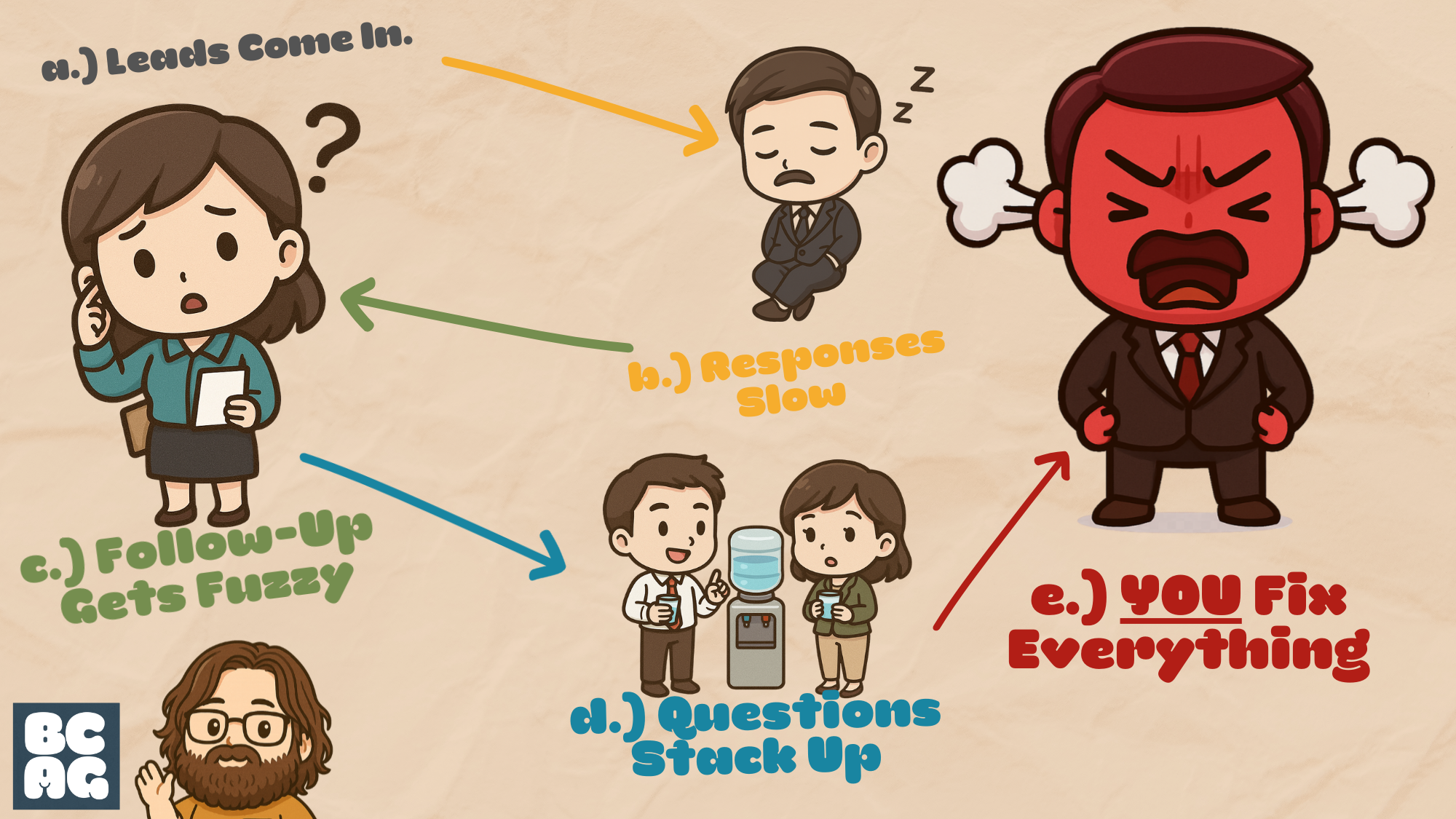
Since you are so smart, you may have noticed that the moment a customer converts, most businesses shift their attention forward, not inward. Marketing moves on to the next campaign. Sales moves on to the next lead. Operations assumes the relationship will take care of itself.
It doesn’t.
This is where momentum stalls. Follow-up becomes inconsistent. Context is lost between teams. Communication switches from intentional to reactive. Customers who were engaged days earlier receive silence, mixed messaging, or generic outreach that feels disconnected from why they said yes in the first place.
Over time, the business stops guiding expression of interest into continuity. Customers don’t actively churn. They simply drift away when they may still need your help or products. This is an attention economy. That's why large brands do so well at creating lifetime customers.
For many businesses, the majority of lifetime value leaks out in three places:
First, immediately post-conversion, when no system reinforces the decision or sets clear next steps.
Second, during pauses in customer activity, when silence replaces reassurance and value reminder.
Third, at transitions, renewals, reorders, upgrades, or follow-on services, where nothing actively pulls the customer forward.
None of these failures are visible in attribution reports. They don’t show up as marketing losses. They appear as flat revenue, declining repeat business, and a constant need to replace customers instead of retaining them.
Lifetime value doesn’t break because customers leave. It breaks because nothing is designed to keep them moving through your funnel to continue to provide solutions for their problems.
So. What Do I Do If I Am READY TO FIX WHAT ACTUALLY MOVES REVENUE?
If you’re tired of pouring money into new campaigns only to watch momentum stall the moment spending slows, you’re not alone. Most businesses never struggle with visibility. They struggle with what happens after someone pays attention. That’s where lifetime value breaks, where customers drift, and where revenue quietly plateaus no matter how strong the front end looks.
You don’t need louder marketing. You need a system that carries interest forward, reinforces decisions, and keeps customers moving long after the initial conversion. When continuity is designed instead of improvised, everything changes. Follow-up becomes automatic instead of reactive. Retention becomes predictable instead of accidental. Marketing becomes efficient because every customer is worth more over time.
If you’re ready to build the structure that agencies never touch—the system that survives beyond ad spend and turns attention into long-term revenue—I can help you create it.
This Is Where the Real Work Begins.


